Commercial Real Estate Development Projects in Puerto Rico: What Investors Should Plan Before Year-End

October 7, 2026

Quick Summary:


Start by defining the project’s intended use, approximate scope, operating needs, and target schedule.


Review known site conditions, access, utilities, drainage, and the permitting path that may apply. Then build an early budget and schedule around documented assumptions, procurement needs, design decisions, and construction sequencing. 


Track open questions, assign responsibility for resolving them, and confirm project-specific requirements with the appropriate professionals and authorities before making major capital decisions.


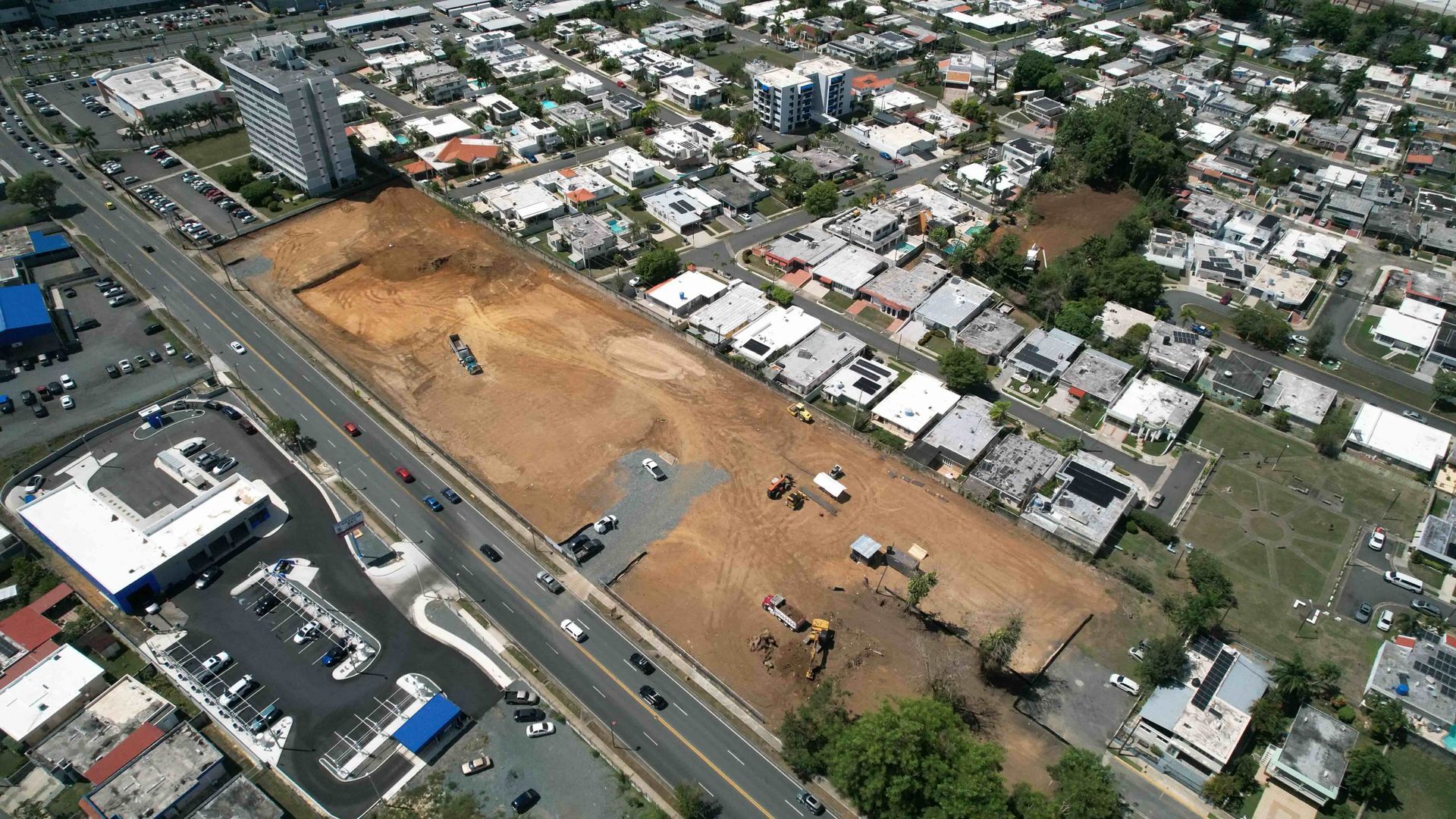
Aerial view of a large cleared dirt lot beside a road, surrounded by houses and city buildings.

Before you commit capital to a commercial real estate project in Puerto Rico, you need a clear view of how the property, proposed scope, and path to construction support its intended use.


Questions about utilities, permitting, procurement, and scheduling can make year-end investment decisions harder to evaluate.


In this guide, we explain what to review, which assumptions to validate, and how to identify the next planning decisions before the project advances.

Define the Project Before Committing to a Site or Building

Define the project before choosing the property

Choosing a site before defining the project can lead to costly redesigns, schedule changes, and compromises when the property cannot support the intended use.


Start by documenting the project’s purpose, approximate size and scope, operating requirements, target schedule, and known technical or logistical constraints.


Use those needs to compare potential sites and buildings before their limitations begin to shape the plan.


A ground-up development and an existing-building renovation raise different planning questions. The better fit is the property that supports the project’s intended use, operating needs, and schedule with fewer costly adjustments.


Ground-Up Development

Ground-up development gives the project team the opportunity to plan a facility around the intended program and operating requirements from the beginning.


That flexibility also makes early site evaluation important. Access, site preparation, utilities, drainage, infrastructure needs, construction staging, and the relationship between the proposed building and the property can all influence the scope of your investment.


Document the site conditions that are known, the information still missing, and the investigations needed before design advances. Those findings support more useful budget, schedule, and construction assumptions.


Existing Building / Renovation

An existing building requires a review of how the proposed use fits its current conditions.


Structural and MEP systems, utility capacity, access, prior improvements, demolition, and adaptation needs can all affect scope.


Some conditions may remain hidden during an initial review. Identify which ones need further investigation before relying on budget or schedule assumptions.


Before selecting the building, identify the work needed to support its intended use and the conditions that still require investigation.

Validate Site, Utilities, and Permitting Early

Not reviewing site conditions, infrastructure, utilities, access, and permitting before making design decisions can become difficult and costly to change once the project has started.


For example, a project may need to consider how construction crews and equipment will access the site, where materials can be staged, what existing utility infrastructure is available, whether additional infrastructure work may be required, and how drainage or other site conditions interact with the proposed development.


In Puerto Rico, the applicable permit path depends on the proposed work and property, so assumptions about permits in Puerto Rico should be checked before they shape design or cost decisions.


The Puerto Rico Office of Permit Management (OGPe) coordinates permitting procedures in Puerto Rico.


At DEV Builders Group, we understand how permitting considerations fit into pre-construction planning and can help you identify open questions, coordinate their review with the appropriate licensed professionals and authorities, and keep unresolved assumptions visible.


Effective pre-construction planning connects those questions to the budget and schedule early.

Build the Budget and Schedule Before Year-End

Treat an early construction budget as a planning tool. Its usefulness depends on the information and assumptions behind it.


Before relying on an estimate, consider the proposed scope, site or existing-building conditions, major MEP requirements, expected materials and finish level, logistics, phasing, and other project-specific variables.


Keep unknown conditions visible. Document the assumptions behind the estimate, then determine where further investigation or a project-specific contingency may be appropriate.


This helps you understand what the current budget includes and what could change as the project becomes more defined.


An early schedule should account for design decisions, approvals, procurement, materials or equipment with long lead times, site preparation, construction sequencing, and any required phasing. Each can affect when work begins and how the project progresses.


Before relying on a budget or schedule for year-end capital decisions, ask what information is still missing and who will resolve it.

Planning a commercial development in Puerto Rico?

Bring the information you have about the proposed use, candidate property, timing, and known constraints. DEV Builders Group can discuss how those factors shape the project’s scope and next planning decisions.


Discuss Your Timeline and Scope

Plan for Puerto Rico-Specific Execution Factors

Confirm which Puerto Rico execution factors apply to the specific property and scope before setting construction milestones.


Materials or equipment sourced off-island may require additional procurement coordination. Site access and staging can shape the construction sequence.


Utility conditions and unknowns in an existing building may change the scope. For an occupied property, the team should also account for access and operational needs when considering phasing.


Weather-related planning may also be relevant depending on the project's schedule and scope, particularly when sequencing exterior or site work.


These factors vary by project. Record the ones that apply, their effect on scope or timing, and the decisions needed to address them during planning.

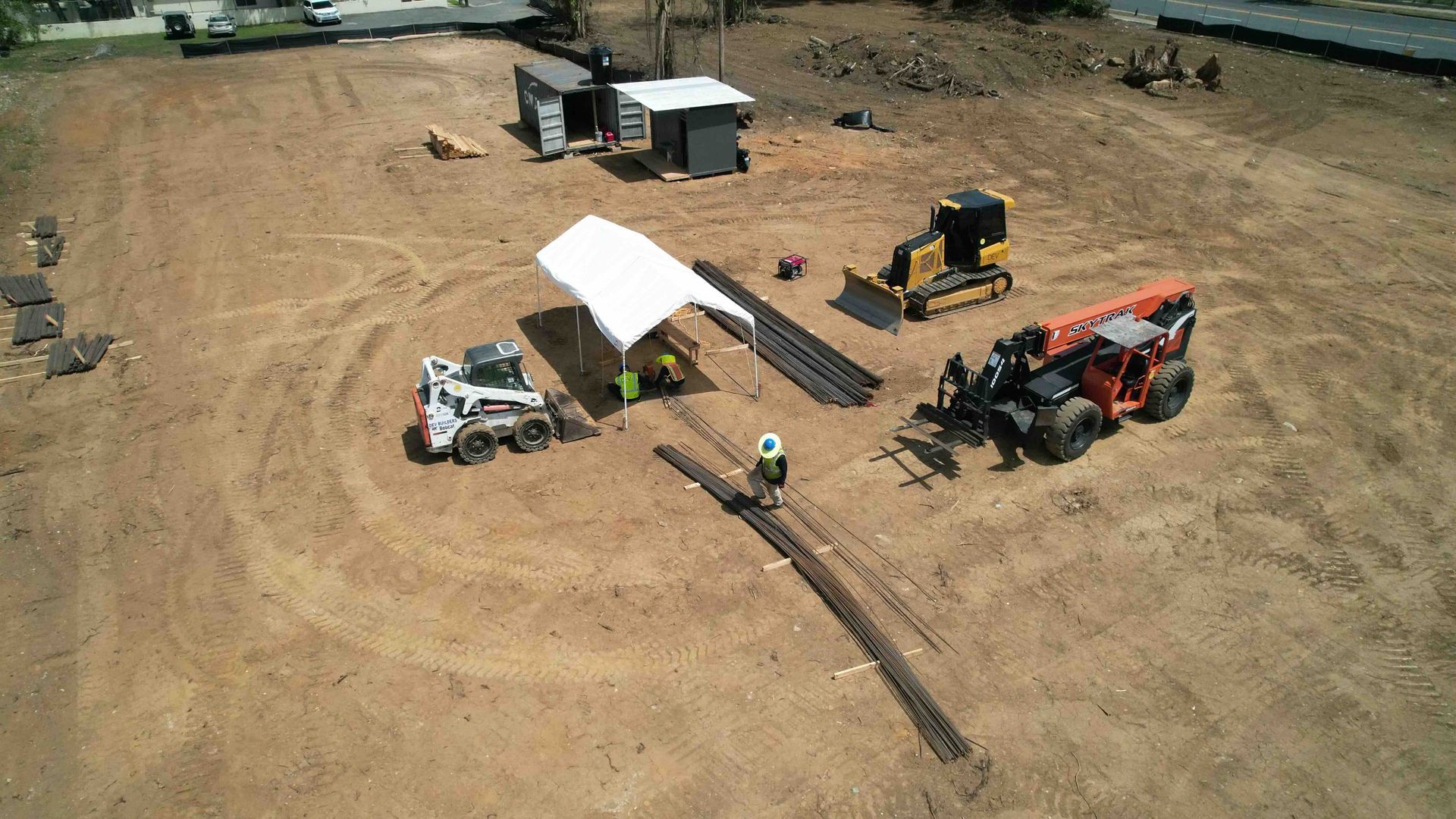
Construction site with excavators, a white canopy, trucks, and dirt grading work on a wide open lot

How DEV Builders Group Supports the Project From Planning Through Construction

DEV Builders Group connects early planning with field execution through pre-construction, construction project management, full-service construction, and an in-house equipment fleet. The relevant support depends on the project's scope, stage, and open decisions.


Pre-Construction

At DEV Builders Group, our pre-construction work covers early planning, scope, budgeting, scheduling, feasibility considerations, site evaluation, and coordination.


We use this stage to identify which assumptions are confirmed and which decisions need further attention before field work begins.


For you as an investor or developer, that information can help clarify what needs to be resolved before the project moves into its next phase.


Construction Project Management

As the project advances, construction project management connects the plan to day-to-day execution.


We coordinate trades, schedules, site logistics, inspections, and communication as work progresses. 


DEV Builders Group provides you regular progress updates and reporting. This gives you an actual view of project progress and helps keep open decisions visible.


Full-Service Construction

For projects that need continuity from planning through field execution, full-service construction keeps key construction responsibilities connected as the project advances. 


Our current model pre-construction planning, project management, construction execution, permitting coordination, on-site supervision, and post-construction support.


This allows decisions established during planning to remain connected to the team responsible for coordinating and executing the construction work.


In-House Equipment Fleet

DEV Builders Group also maintains an in-house construction equipment fleet as part of its operational construction capabilities.


Equipment availability can inform field operations, site logistics, and construction sequencing for a specific project.

Year-End Planning Checklist for Developers and Investors

If you expect a commercial real estate project to move forward next year, use a year-end review to identify what is defined and what still needs attention. Before the next phase, aim to understand:


  • Project objective: What will the property or facility need to accomplish?
  • Candidate site or building information: What is already known about the property?
  • Known constraints: Which site, building, utility, access, or operational conditions could influence the project?
  • Early scope: What work is currently expected, and which portions remain undefined?
  • Budget assumptions: What information supports the current budget, and which unknowns could change it?
  • Permitting path: Which approvals or permitting steps need to be confirmed for the proposed scope?
  • Decision and procurement schedule: Which decisions, materials, or equipment could influence project timing?
  • Next-step ownership: Who is responsible for resolving each outstanding question?


Use this as a planning checklist, not as a universal legal or construction requirement. Confirm requirements for the specific property and scope with the appropriate professionals and authorities.

Plan Your Puerto Rico Project

Share your proposed use, location, stage of planning, and target timing.


DEV Builders Group can review that information with you and identify the next decisions on scope, site conditions, budget assumptions, and construction planning. If you have any questions, feel free to contact us.

Frequently Asked Questions

  • When should a pre-construction team get involved?

    You can involve a pre-construction team while major project decisions are still under review, before drawings are complete. 


    At that stage, the team can review available information, identify missing inputs, consider site or building constraints, and develop early scope, budget, schedule, and procurement assumptions. 


    This gives you more context for deciding what to investigate or confirm before the project advances.


  • What information should an investor prepare before an initial project review?

    Start with what you already have. Useful information may include the municipality or project area, intended use, site status, approximate size, target construction or opening dates, and known operating requirements. 


    Surveys, site plans, concept drawings, property photographs, and brand or operating requirements can add context when available. You can also list the questions you need to resolve before choosing a site or advancing the project.

  • What changes if a commercial building must remain open during renovation?

    An occupied property adds decisions about access, business operations, temporary utility interruptions, safety boundaries, and construction phasing. 


    Share operational limits early so the team can review which work may proceed while the property is active and where downtime may be needed. The sequence and approvals depend on the building and proposed scope.


  • Does an early construction budget represent the final project price?

    No. An early budget is a planning tool based on the information and assumptions available at that stage.


    As scope, site conditions, design, MEP requirements, materials, procurement, logistics, and other project variables become better defined, the budget can be refined accordingly.


    Investors should understand both the number and the assumptions supporting it before using an early budget to guide major project decisions.


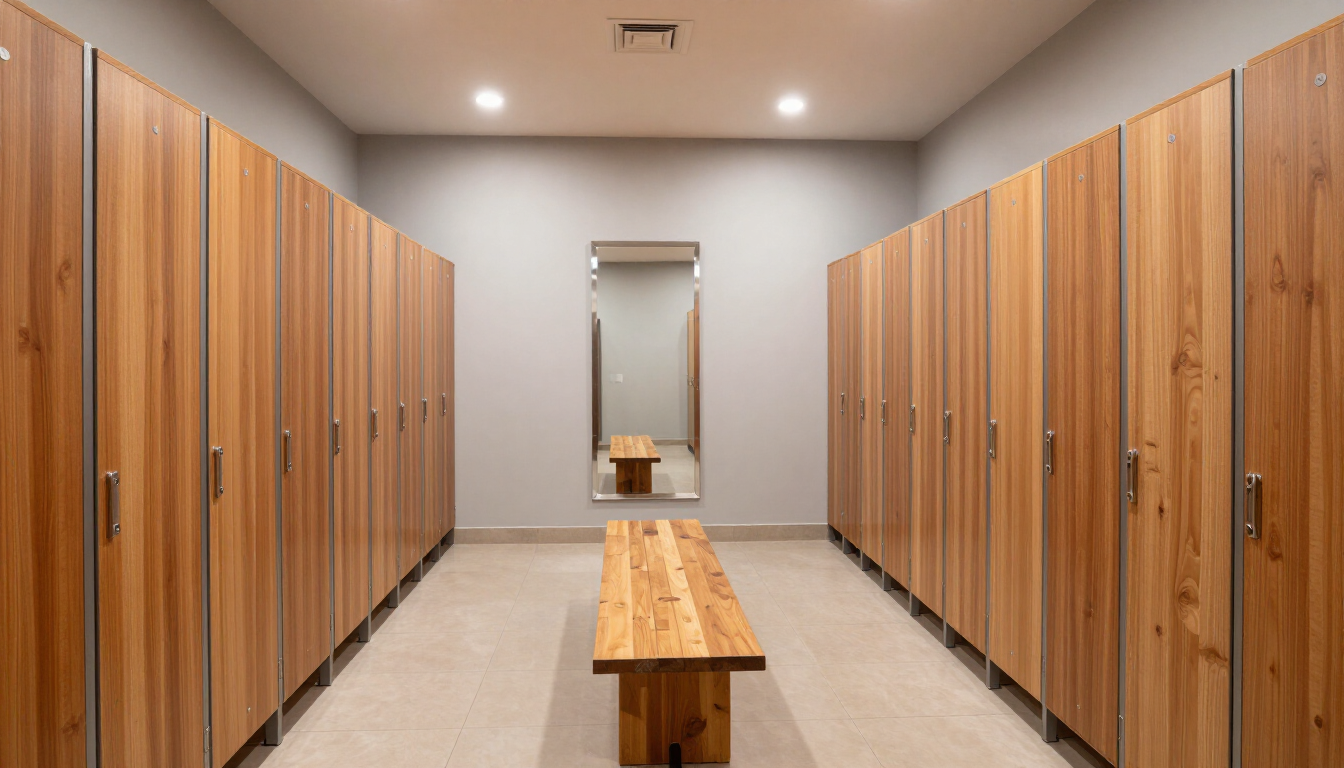
Spacious locker room with wooden benches and rows of light wood lockers on both sides.
August 5, 2026
Review planning ranges for locker room construction in Puerto Rico and the cost drivers behind plumbing, waterproofing, HVAC, finishes, and retrofit work.
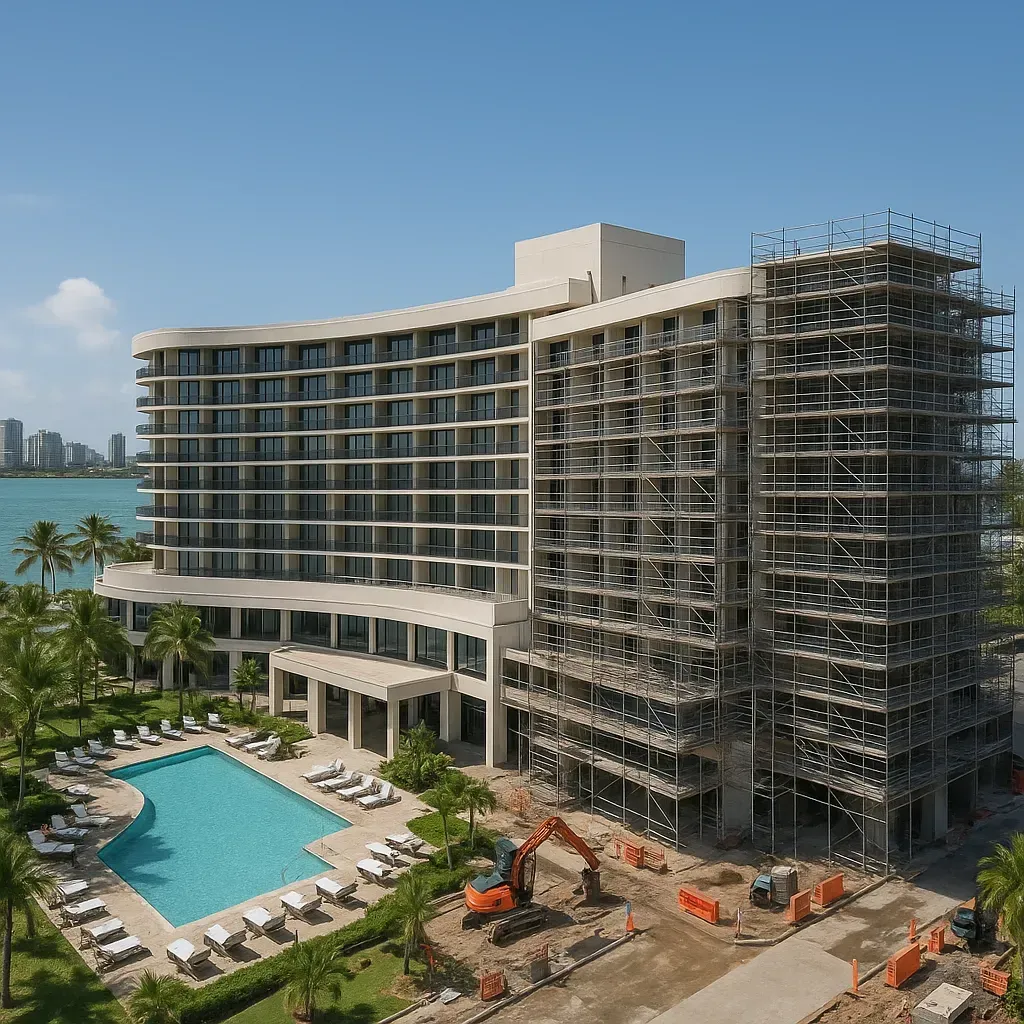
Hotel under construction with pool, scaffolding, and construction equipment in Puerto Rico.
May 11, 2026
Learn what a hotel property improvement plan requires, when brands issue PIPs, and how owners can plan scope, phasing, and Puerto Rico logistics.

Large white domed building in Havana, Cuba, under a bright blue sky.
By Alejandra Inserra • January 21, 2026
Puerto Rico released a permitting reform roadmap. Learn what it changes, what investors should do now, and how DEV Builders helps reduce delays.
Pool with a waterfall feature surrounded by green foliage, under a wooden pergola.
By Alejandra Inserra • December 29, 2025
Plan 2026 Puerto Rico budgets with clear cost drivers, logistics premiums, and Act 60 incentives. Get steps to protect ROI.
By Alejandra Inserra • December 29, 2025
Plan the full cost of Puerto Rico sports facilities. Control corrosion, humidity, and downtime with smart specs, maintenance, and clear LCC steps.
Construction worker in a hard hat and orange vest examining blueprints at a building site with palm trees.
November 9, 2025
Build in Puerto Rico: check zoning and federal flood maps, hire a licensed architect and engineer, file permits, set up utilities, secure occupancy

Man receiving documents from a woman in an office setting. Blue hard hat on the table.
October 19, 2025
Learn about Puerto Rico’s construction safety standards, OSHA regulations, and investor compliance requirements. Build safely with DEV Builders.
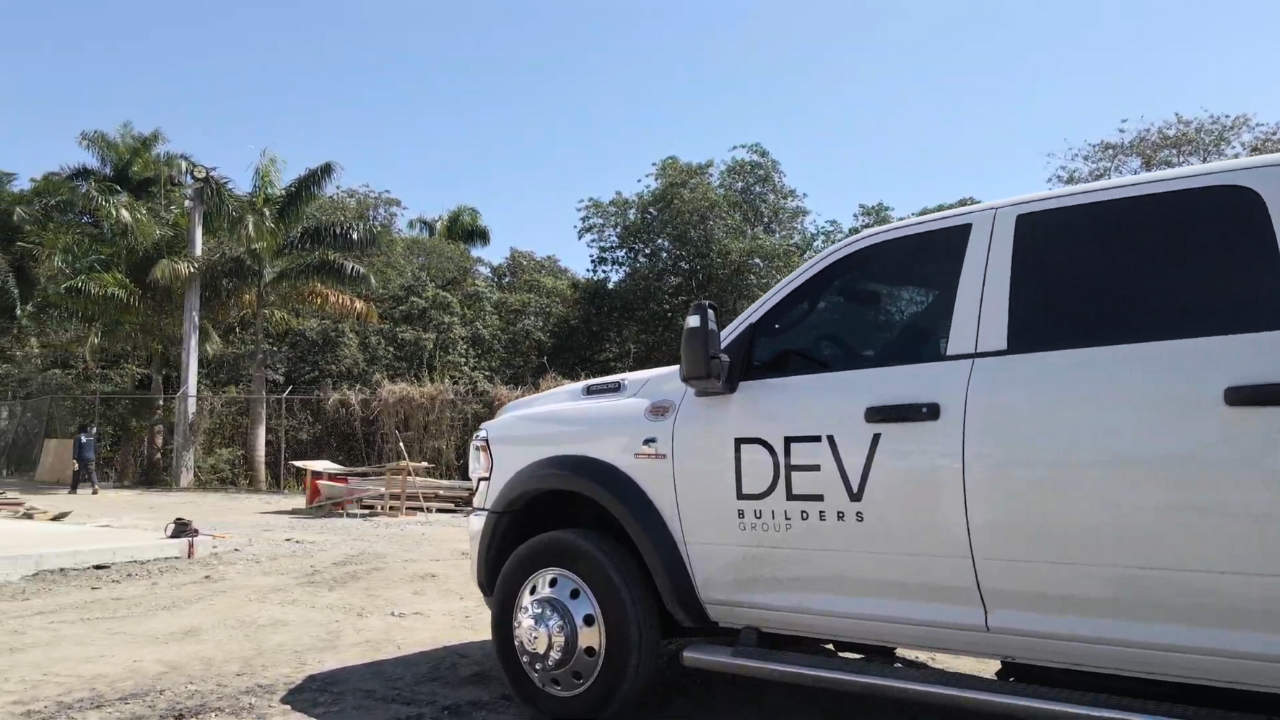
White work truck with
October 19, 2025
Learn how in-house construction equipment fleets help control costs, reduce delays, and ensure quality across Puerto Rico’s projects.

Sunset with electric pylons silhouetted against a bright yellow and orange sky, over a field.
October 13, 2025
Learn why diesel beats grid reliance for Puerto Rico projects. Get steps, permits, and options explained. Contact DEV Builders for guidance.

Palm trees and houses with red-tile roofs line a coastal road under a cloudy sky.
October 13, 2025
Discover the pros and cons of prefab, modular, and traditional homes in Puerto Rico. Learn what fits your project best.

Show More